CLER Distinguished Scholar in Residence 2025

We are pleased to announce CLER Distinguished Scholar in Residence 2025:
Professor Noriko Ishihara, Hosei University
Noriko Ishihara is Professor of Applied Linguistics and (T)ESOL at Hosei University, Japan. She holds a PhD in curriculum and instruction from the University of Minnesota and currently teaches intercultural communication, TESOL methods, and English as an additional language at Hosei University. She also facilitates professional development courses in Japan, the U.S., and elsewhere with a particular focus on L2 pragmatics and intercultural awareness. Her research interests include instructional pragmatics, identity and culture in language learning, (im)politeness and microaggressions in language teaching, teacher education, and aviation English. She is an author of Teaching and learning pragmatics: Where language and culture meet (2nd edition, Routledge 2022), earlier editions of which have been translated into Arabic, Japanese, and Korean, as well as other publications in (critical) applied linguistics and language pedagogy. More information about her work can be found on her personal profile webpage.
CLER Capacity Building Series
Building rapport through language: Addressing pragmatics in the L2 classroom
16 June 2025 (Monday) 16.00-18.00 (with light refreshments served from 15.30)
Coach House, School of Education
This is a free event but registration is essential as places are limited.
Registration for this event is now closed.
Without cultural knowledge, we may not fully understand the meaning of a message in an additional language (L2). Even with perfect grammar, we may unintentionally offend our conversational partner without using the language in a socially acceptable manner. Learners of an L2 need not only the knowledge of grammar and vocabulary but also pragmatic competence, or the ability to understand and use socioculturally preferred language according to the given social context. However, pragmatics has generally received little attention in the L2 curriculum and teacher development. In this workshop, you will have a hands-on opportunity to experience how pragmatic aspects of an L2 can be explicitly introduced to learners, how (meta)pragmatic awareness can be enhanced, and how production of socially preferred language can be practiced according to the social context. Students are encouraged to remain true to their hybrid identities while learning to build rapport through language. Given today’s globalization, we will be mindful of the sociocultural diversity of the learners and aim for culturally sensitive pedagogy.
CLER Distinguished Lecture
17 June 2025 (Tuesday) 16.00-18.00
Baines Wing SR (2.08)
This is a free event but registration is essential.
The lecture is followed by a drinks reception.
Registration for this event is now closed.
A critical approach to L2 pragmatics instruction: Promoting linguistic justice through multilingual pragmatics
Under the influence of identity scholarship in applied linguistics at large, a growing body of research has investigated the relationship between identity and second language (L2) pragmatic use and development. This presentation will begin with a brief overview of how identity and agency have been investigated in L2 pragmatics research. In a multilingual turn in applied linguistics (Conteh & Meier, 2014; May, 2014, see also Dovchin, 2019; Kubota, 2016), learners can be reconceptualized as multicompetent or translingual, mixing and meshing, or translanguaging their resources within their multilingual repertoire (Canagarajah, 2013; Li, 2018). This translingual agency can be enacted at a pragmatic or discursive level, as multilinguals creatively and critically enhance their meaning-making as part of their complex identity negotiation.
In light of this awareness, the presentation will also offer some suggestions for teaching L2 pragmatics in a global context with examples drawn from relevant literature and classrooms. Unless teachers have a balanced understanding of the diverse social and linguistic practices across and within communities and address such subtleties in the classroom, pragmatic instruction runs the risk of essentializing cultures, language uses, or communities, an outcome that would defeat the purpose of intercultural communication. Cultural homogenization and essentialization in pragmatic instruction can lead to prejudice, discrimination, marginalization, othering, unequal social practices, and misrepresentations of linguistic justice (Ishihara & Porcellato, 2022). While teachers can advocate for linguistic equity and diversity among their students, a practice that can be supported through teacher development, teachers should also be guided to become aware of their own multiplicity and translingual practice, to put this awareness into practice in their language classrooms, and to reflect critically and recursively on this process (Motha, Jain, & Tecle, 2012., Zheng, 2017; Ishihara, Pocellato, & Prado, 2023).
Discussants
Dr Gise Tomé Lourido

Gise Tomé Lourido is an Associate Professor in Sociophonetics at the University of Leeds. She holds a PhD in Speech, Hearing and Phonetic Sciences from UCL. Her research interests include accent bias and related inequities, sociophonetic variation in speech perception and production, and bilingual speech processing. Her most recent project, funded by the Michael Beverley Innovation Fellowship, explored the consequences of accent bias on students' experience at university and co-developed initiatives to tackle accent bias and discrimination. As Director of Language@Leeds, a university-wide interdisciplinary network, she fosters collaborations to address key societal issues through language research.
Dr Taguhi Sahakyan
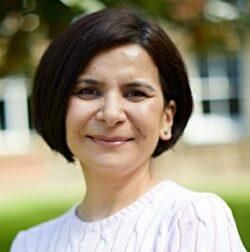
Taguhi Sahakyan is a Lecturer in Language Education and Programme Lead for MA TESOL Studies programme at the University of Leeds. She is an experienced researcher and practitioner in language teacher education, with expertise in teacher motivation, teacher development and identity, and in innovative methods of qualitative data generation in teacher research. She has published in various academic outlets including TESOL Quarterly.
Prof Cécile de Cat

Cécile de Cat, Professor of Linguistics at the University of Leeds, specialises in bilingualism (mainly in children and adolescents), and in the environmental, experiential and cognitive factors affecting language outcomes. She is interested in the impact of language on life chances. Much of her work focuses on pragmatic competence: the ability to go beyond the literal meaning. More information about her work can be found here.
Dr Ramzi Merabet
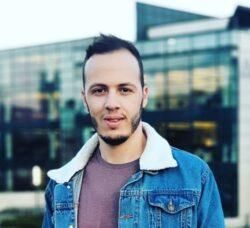
Dr Ramzi Merabet is a lecturer in EAP and intercultural studies at the University of Leeds. His research interests are broadly related to the areas of intercultural studies, internationalisation, and higher education studies. He’s interested in researching how culture and interculturality are mobilised at institutional level, neoliberalism in UK Higher Education, and the implications resulting from the mobilisation of labels in universities. He currently serves as the Research Officer for the International Association for Languages and Intercultural Communication (IALIC).