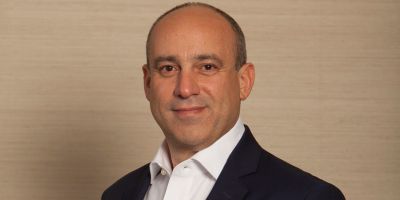

Professor Subhajit Basu plays key mentoring role in using AI to deliver real social benefit

Professor Basu participated as a Mentor in the UK-India Collaborative AI Innovation Programme for Social Impact, a UK Government-supported initiative convened ahead of the India AI Impact Summit 2026.
This event was organised by the UK Government and The Dialogue under the UK-India Technology Security Initiative. This programme aims to nurture collaborative innovation grounded in trust, fairness, accountability, and practical, real-world deployment.
The programme brought together a cohort of AI practitioners and organisations from the UK and India to develop and test practical AI use cases intended to deliver real social benefit, including in health, climate and energy, education and skills, fintech/financial inclusion, and public sector innovation.
Professor Basu says:
UK-India collaboration works best when it is built around shared problems and practical solutions. This programme created exactly that environment – bringing people together to refine work that can have measurable social impact.
The distinctive aspect of this programme was its focus on moving beyond ideas to deployment-ready demonstrations, grounded in responsible practice and shaped by real institutional and regulatory constraints.
On the second day, Professor Basu also took part in the closed-door evaluation sessions where selected teams presented short demonstrations centred on deployment readiness, collaboration strength, clarity of social impact, and responsible AI maturity. He then contributed to the evaluation feedback session where mentor inputs directly informed showcase shortlisting.
He says:
As a mentor, my role was to help teams stress-test their work against the realities of regulation, institutions and implementation. The evaluation sessions were a valuable way to focus attention on what makes an AI project not just innovative, but credible, safe and ready to scale.
His was a practical, hands-on mentoring and evaluation role in a high-trust UK-India programme, helping teams refine work that is intended to be credible, responsible, and capable of real-world implementation, with structured mentor feedback shaping which collaborations were selected for wider visibility ahead of the Summit.
He concludes:
Responsible AI is not an abstract checklist - it shows up in the design choices teams make, the safeguards they build, and how they plan for real-world consequences. It was encouraging to see responsibility treated as central to deployment readiness, not an afterthought.
Professor Basu is a member of the Centre for Business Law and Practice and the School of Law’s Technology, Governance and Intellectual Property Law Group (TGIPG). As demonstrated by Professor Basu’s work on AI, TGIPG is leading the way in addressing the challenges of technological disruptions on law, regulation, justice and related institutions and disciplines.
To keep up with more of Professor Basu’s work, visit his LinkedIn or Bluesky @subhajitbasu.bsky.social